
How many units do you actually need?
Start with worker or guest count, not guesswork. OSHA 1926.51(c)(1) sets the construction ratio: 1 toilet for 20 workers or fewer, then 1 toilet seat and 1 urinal per 40 workers once you pass 20. Under 200 workers, that ratio holds until you hit 1 per 50. If you are running a non-construction job site, general industry rules under 1910.141(c)(1)(i) use a different table, so do not mix the two. Farms and hand-labor crews fall under OSHA 1928.110 instead, which calls for one facility per 20 employees reachable within a quarter mile walk. For events, the math is looser but the how many porta potties do I need guide breaks it down by guest count and hours. Once you have a number, decide on unit type. A standard porta potty rental covers most construction and casual events. If someone on site needs accessible access, ADA Standards section 213.2 requires at least 5 percent of a clustered bank to be accessible, never fewer than one unit, so budget for an ADA accessible porta potty even on a small job.
What does delivery access require?
Clear the path before the truck arrives, not after. A roll-off or trailer delivery needs about 60 feet of straight clearance behind the vehicle to back in and set down safely. That is the single biggest delay we see: driveways blocked by parked cars, low branches, or gates too narrow for the frame. Measure your gate width against a standard unit footprint of about 44 by 48 inches on the ground and 92 inches tall before delivery day. If you are placing a restroom trailer rental instead of a standard unit, the clearance math is stricter because the trailer itself is longer than a single toilet frame. Chino Hills driveways vary block to block, so walk the route with your driver's eye, not your car's. If you are near Eastvale, 13.7 miles east, and considering pooling a delivery route with a second site, ask about combined delivery fees, since a single delivery charge on our porta potty rental cost page runs cheaper than two separate trips. Ground surface matters too: ADA Standards section 302.1 calls for stable, firm, slip resistant footing, which rules out soft dirt or gravel that shifts under foot traffic.
Do you need handwashing separate from the toilet?
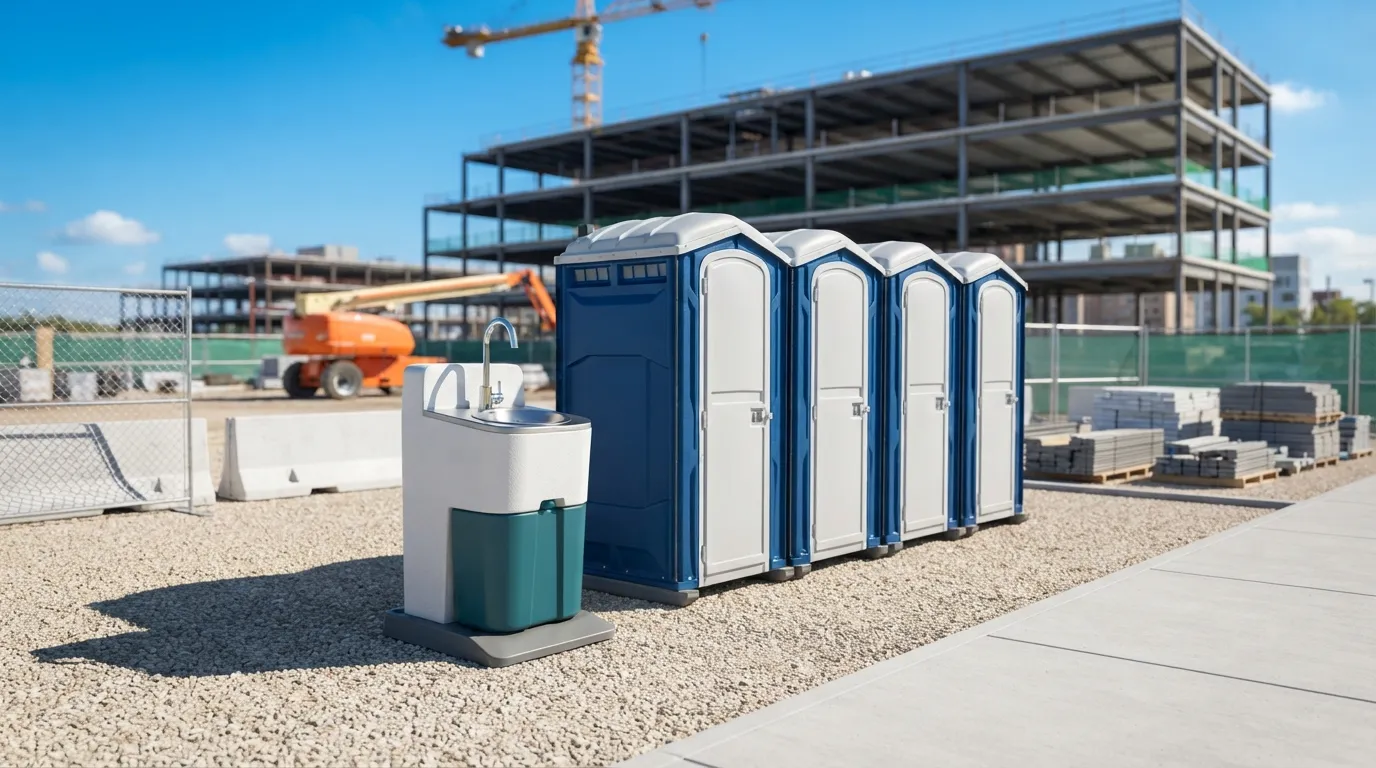
Yes, if your crew works with paint, coatings, herbicides or insecticides. OSHA 1926.51(f)(1) requires washing facilities specifically for those contaminant tasks, not as a general rule for every job site. For everyone else, general industry washing rules under 29 CFR 1910.141(d)(2) call for soap and a towel or hand-drying device, and hand sanitizer alone does not satisfy that standard. That is why most crews order a handwashing station rental or a portable sink rental alongside the toilets rather than relying on gel dispensers. A hand sanitizer station rental is a fine supplement but should not stand alone on a paint or pesticide job. Check the handwashing station requirements page if your crew is mixed trade, because one subcontractor's task can trigger the requirement for the whole site. Water supply matters here too: OSHA 1926.51(a)(1) requires an adequate supply of potable water at every place of employment, which is worth confirming with your rental provider before delivery, not after the first shift starts.
What should you check before the rental period starts?
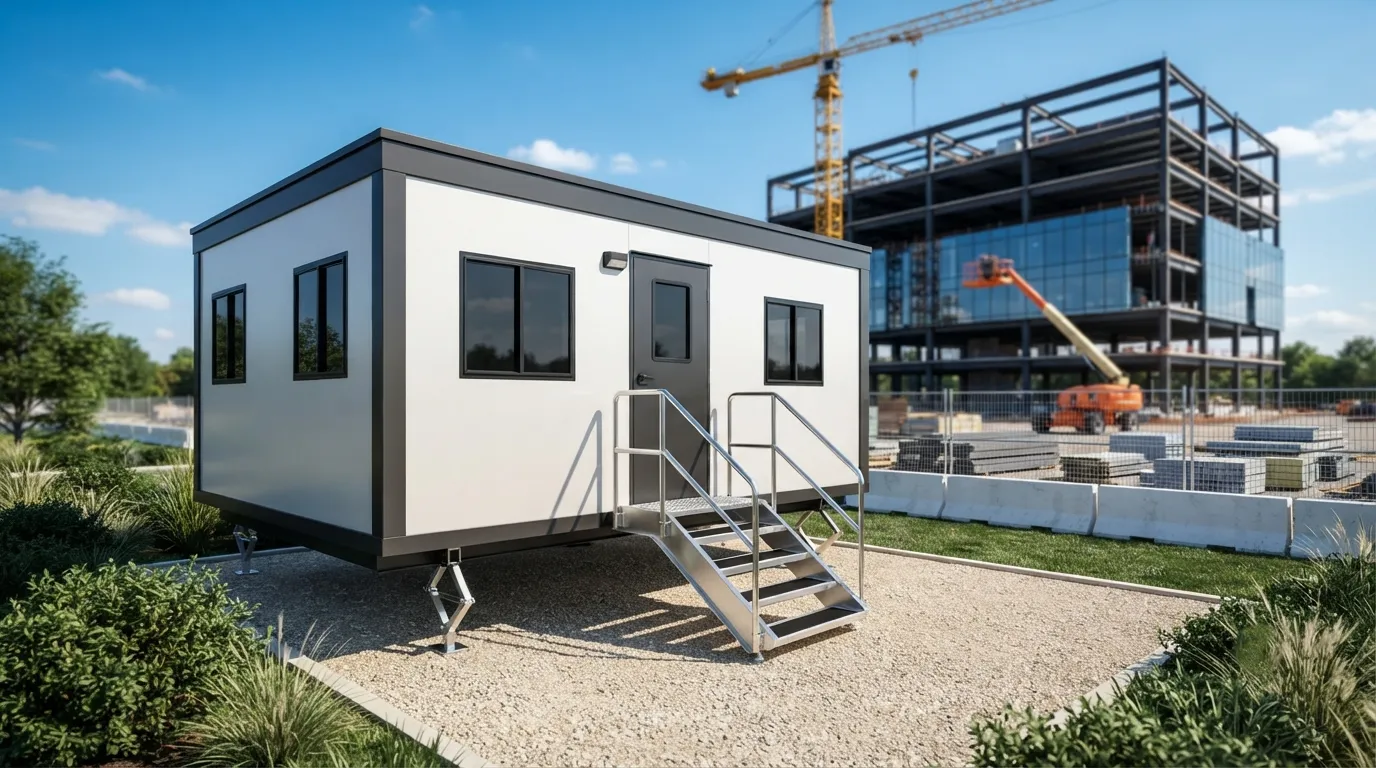
Confirm service frequency, placement, and any accessibility clearance before the units land. ANSI/PSAI Z4.3 sets a baseline service interval of once per week for up to 10 users over a 40 hour week, so a high-traffic event or a long construction run needs more frequent visits than that baseline. Check clearances too: ADA Standards section 405.2 caps ramp slope at 1:12 if you are wheeling in an accessible unit over uneven ground, and section 304.3.1 calls for a 60 inch turning circle inside any accessible stall. Door width matters for wheelchair users specifically: section 404.2.3 sets minimum clear door opening at 32 inches. If you are placing units near a public sidewalk or street, confirm with the city that placement in the right of way is allowed, since that rule is not something to guess at. Our porta potty placement guide and porta potty permit requirements page both walk through what to check locally in Chino Hills before delivery day. Lock in pricing early using the porta potty rental per day or monthly porta potty rental pages depending on job length, and request a written quote through request a quote so nothing shifts after the truck is on site.
| unit | day | week | month |
|---|---|---|---|
| standard | 100-350 | 130-500 | 125-325 |
| ada | 200-400 | 120-240 | n/a |
| deluxe | 85-1200 | 150-290 | n/a |
How far ahead should I book a porta potty in Chino Hills?
Book 7 to 10 days out for standard jobs, longer for events over a weekend. Peak season and larger events fill delivery slots fast. If your date is inside a week, call rather than book online, and check the emergency porta potty rental page for same-week openings.
Do I need a permit for porta potties in Chino Hills?
Maybe, depending on placement. If units sit on private property clear of the sidewalk, permits are usually not needed. If placement touches the public right of way, that needs confirming with the city directly. See porta potty permit requirements for what to ask.
What is the difference between a standard and deluxe unit?
A standard unit is a basic non-flushing toilet with hand sanitizer built in. A deluxe flushable porta potty adds a flush mechanism and a nicer interior, priced higher across day and week rentals than a standard unit.
How often are units serviced during a rental?
Baseline service under ANSI/PSAI Z4.3 is once weekly for up to 10 users across a 40 hour week. Busier events or larger crews need more frequent visits. Ask about your specific schedule on the how often are porta potties cleaned page.
Can I rent just one unit for a small home project?
Yes. A single standard porta potty rental works fine for a driveway remodel or small renovation crew. Check the home renovation porta potty page for placement tips specific to residential jobs in Chino Hills.
Next step
Get a delivery date
Tell us the address, the dates and the headcount. We size the order and confirm the route.